



CFO Message
Latest Update : Sept.30, 2026
We believe that the ability to generate earnings through our core business—that is, profitability—is the starting point for enhancing corporate value. The core of our financial strategy consists of (1) strengthening profitability through high-value-added initiatives and structural reforms; (2) improving capital efficiency by optimizing working capital and business assets; and (3) the disciplined allocation of generated cash toward growth investments, M&A, and shareholder returns. Through these measures, we will maximize free cash flow and achieve sustainable growth and increased corporate value.
Management and financial targets
In addition to "Plan A: net sales of 2.5 trillion yen, operating income of 250.0 billion yen," a target for the fiscal year ending March 2029 that we formulated in 2019, we have established a new target, "Plan B: net sales of 1.9 trillion yen, operating income of 168.0 billion yen, and a real operating margin exceeding 10%." The real operating margin is calculated by excluding sales of parts and other items supplied by customers from the denominator. It is a management indicator that reflects the profitability of businesses in which the Company actually creates added value.
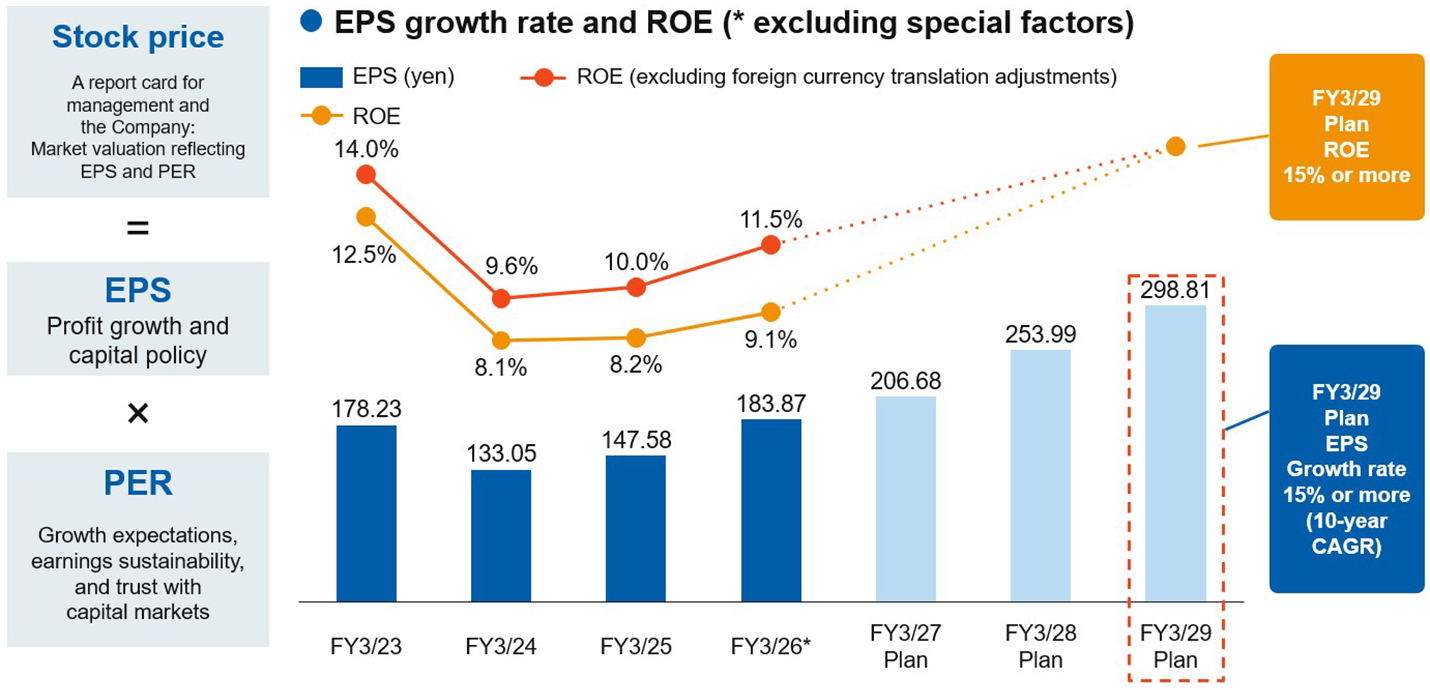
While Plan A incorporates large scale M&A, Plan B is a scenario centered on organic growth. As a top priority, we will strive to improve the real operating margin by expanding our businesses in the Five Growth Areas +1, which are expected to experience high market growth and have a high proportion of high-margin businesses. We aim to secure an ROIC of 8% or higher in each business segment, consistently exceeding the cost of capital (WACC of approximately 6%), and achieve key financial KPIs such as an ROE of 15% or higher and an EPS growth rate of 15% or more (10-year CAGR).
Progress for the fiscal year ended March 2026 and actions to address challenges
For the fiscal year ended March 2026, we set new records with net sales of 1.6644 trillion yen and operating income of 104.0 billion yen. However, given that the operating margin was 6.2% (real operating margin: 7.5%), ROIC was 6.4%, and FCF was 12.1 billion yen, we recognize that there is still room for improvement in achieving the profitability and capital efficiency targets set forth in Plan B. Recognizing these financial challenges must be addressed as a priority, going forward, it will be crucial not only to expand sales but also to increase the proportion of high-margin businesses, make efficient use of invested capital, and translate profit growth into steady growth in FCF. By leveraging AI and DX to visualize key performance indicators (KPIs) for both the P&L and balance sheet, we are promoting company-wide cross-functional management through collaboration not only with the Accounting, Finance & Business Administration Div. but also with sales, procurement, and business units.
P&L: Focus management resources on the Five Growth Areas +1 to improve profitability
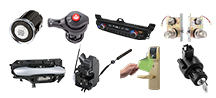
For the fiscal year ended March 2026, growth was driven by demand for data centers and automotive content growth. In the PT segment, production and sales volume, net sales, and operating income all reached record highs. In the MLS segment, while the motor business was impacted by soaring material prices, profitability steadily increased in the AI server and automotive businesses. In electronic devices, new automotive products were launched and profitability in sensing devices improved through the withdrawal from unprofitable businesses and the expansion of niche-leading businesses. In the SE segment, despite a delayed recovery in the power semiconductor market, niche sectors primarily focused on smartphones and medical applications performed well. In sub-core businesses such as optical devices and mechanical components, we are working to restore profitability with a target real operating margin of 7%. The AS segment overcame headwinds in the automotive market and set new records for both net sales and operating income.
Going forward, we will accelerate the expansion of our core products, represented by the Five Growth Areas +1, into high-value-added markets and applications, while rigorously implementing measures to optimize selling prices, reduce procurement costs, improve productivity, and rationalize fixed costs. By steadily advancing structural reforms in low-profitability businesses and increasing the proportion of high-profitability businesses, we aim to achieve a company-wide real operating margin of 10.1%.
B/S: Using ROIC to improve capital efficiency
In terms of capital efficiency, inventory stood at 391.3 billion yen as of the end of March 2026, which is an increase of approximately 40.0 billion yen from the previous fiscal year (a real increase of 14.0 billion yen, excluding the 26.0 billion yen impact of foreign exchange rates). Additionally, due to an increase in accounts receivable resulting from strong sales, a portion of cash collections was carried over to the following fiscal year; as a result, FCF totaled only 12.1 billion yen, indicating room for improvement in working capital management. In light of these challenges, our B/S management strategy will prioritize allocating capital to businesses expected to generate returns exceeding the cost of capital. We will also enhance the efficiency of capital employed by optimizing inventory levels, accelerating the collection of accounts receivable, disposing of non-essential assets, carefully selecting capital expenditures, and shortening the CCC. Going forward, we will ensure the steady conversion of accounts receivable into cash and disciplined capital expenditure, and we project FCF of 69.0 billion yen for the fiscal year ending March 2027. Furthermore, we will implement this capital management approach at the business unit level and manage our business portfolio with a focus on ROIC.
ROIC-based business portfolio management
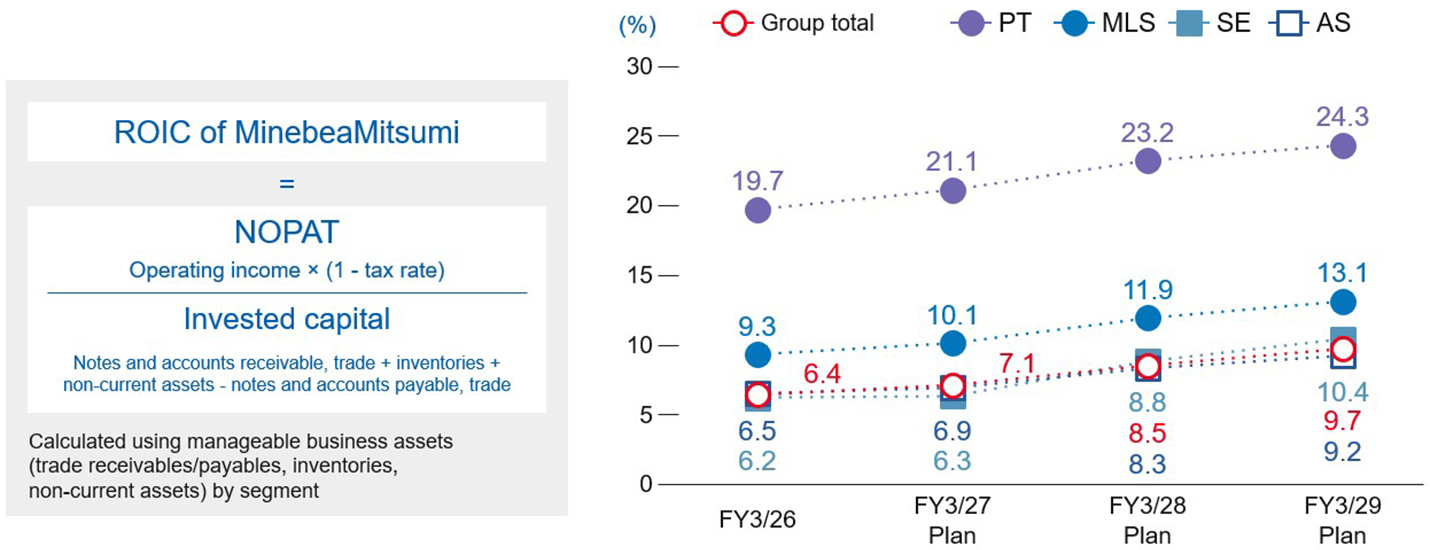
We have shifted from a growth strategy focused on increasing sales to one that emphasizes profitability. We classify our businesses into core, sub-core, and non-core areas and manage our business portfolio accordingly. When considering investment decisions, we manage ROIC by business using a hurdle rate of 8%, two points above WACC (approximately 6%), and use the reverse ROIC tree approach to both maximize net operating profit after tax (NOPAT) and improve the efficiency of invested capital. We pursue maximum operating income by generating profit through expanded sales of high-value-added products, fixed cost reduction, automation, and efficiency gains from the use of AI and DX. Meanwhile, to improve the efficiency of invested capital, we will strengthen our financial position by improving the cash conversion cycle (CCC) through measures such as shortening the collection period for accounts receivable, optimizing accounts payable, and carefully selecting capital expenditures (CAPEX).
ROIC trends
Reverse ROIC tree
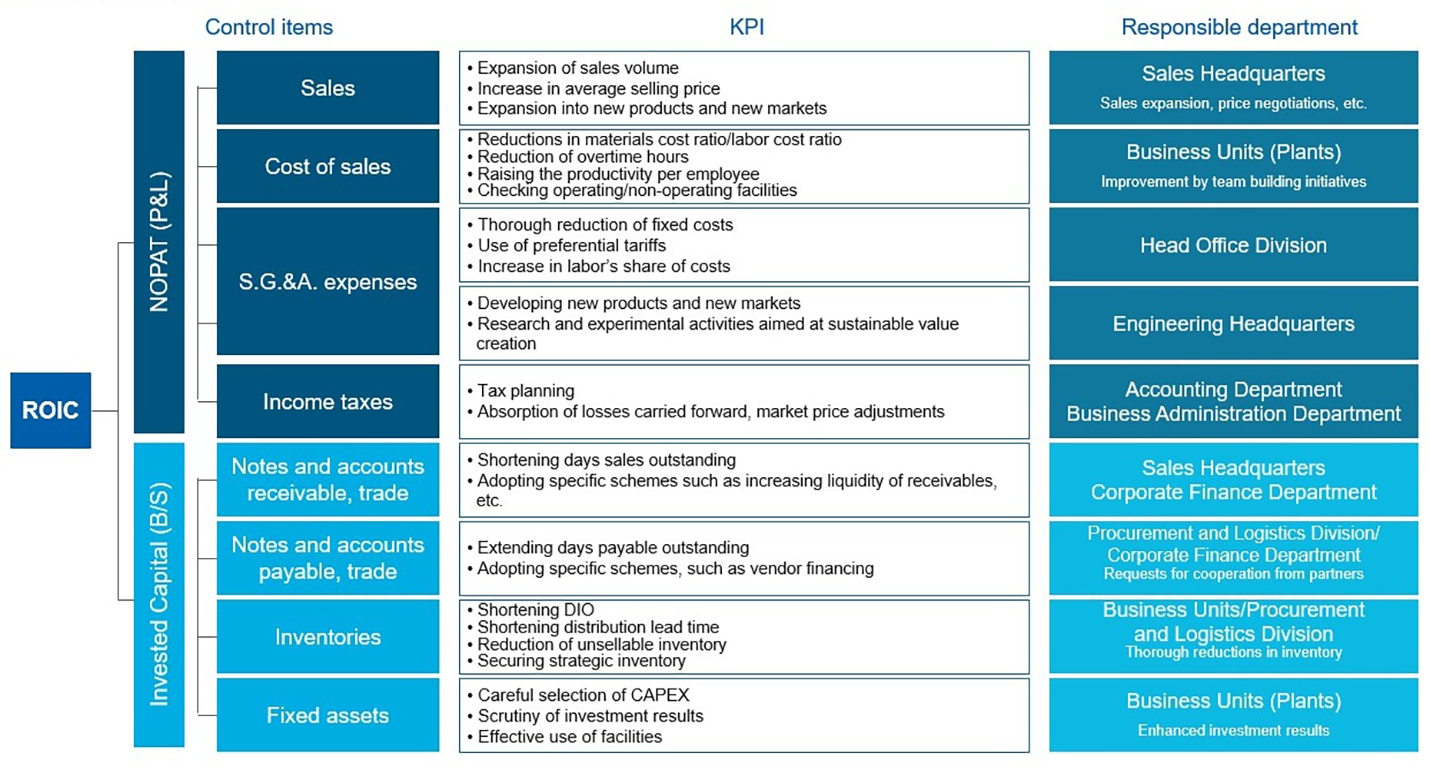
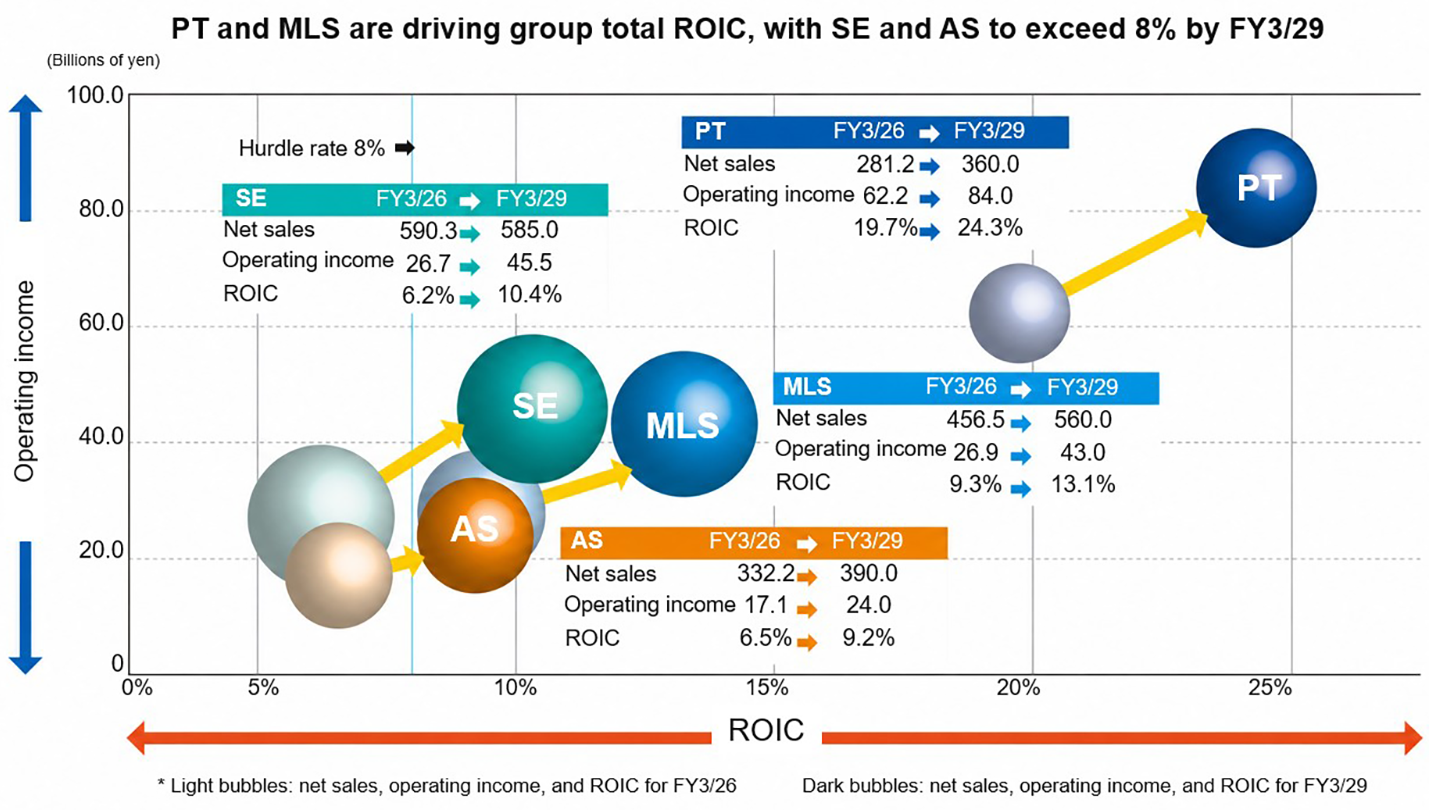
The chart above shows the growth trajectory of each business segment from FY3/26(light bubbles) to FY3/29(dark bubbles). All businesses will strive to expand operating income (vertical axis) and improve capital efficiency (horizontal axis), to shift into the upper-right quadrant.
Further profitability increase in core businesses (PT and MLS)
Businesses, which already boast high capital efficiency, will powerfully drive Company-wide profit growth and cash generation by capturing growth markets and expanding their business foundations.
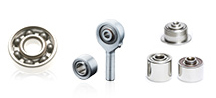
Against a backdrop of robust demand for data center and aerospace products, we aim to establish a bearing production system capable of producing more than 500 million units per month. Furthermore, by firmly capturing growth markets such as cartridge bearings for LiDAR, we will drive ROIC to an exceptionally high level of 24.3%.
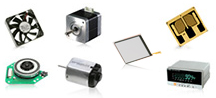
MLS: Profitability has improved thanks in part to increased competitiveness in fan motors and other precision small motors, which have benefited from tailwinds such as AI server demand and content growth in automotive applications. We will improve ROIC to 13.1% through the execution of a major automotive backlight project as well as structurally reforming unprofitable businesses and the buildup of niche-leading businesses in the sensing devices business.
Exceeding the hurdle rate (8%) (SE and AS)
The businesses that currently fall below the Company-wide hurdle rate of 8% will show improved profitability through fundamental structural reform and a shift towards higher value-added operations with a goal to consistently exceed the hurdle rate by the fiscal year ending March 2029.
SE: We are implementing structural reform of unprofitable operations to address unprofitability including the discontinuation of production at our Malaysian power supply facility as well as further strengthening our highly profitable semiconductor division. The current initiative at the Shiga Plant, which has been operating at a loss, is raising the utilization rate through production of lithium-ion protection ICs, MEMS, and IGBTs (including foundry services), and this new production is working to make the plant profitable. We have also returned to profitability in sub-core businesses, such as optical devices and mechanical components which will enable us to raise ROIC to 10.4%.
AS: While continuing to develop high-value-added products, such as wing handles for BMW, we will resolutely implement structural reforms, including the closure of unprofitable facilities. We will strengthen our profit base and improve ROIC to 9.2%.
Maximizing free cash flow generation
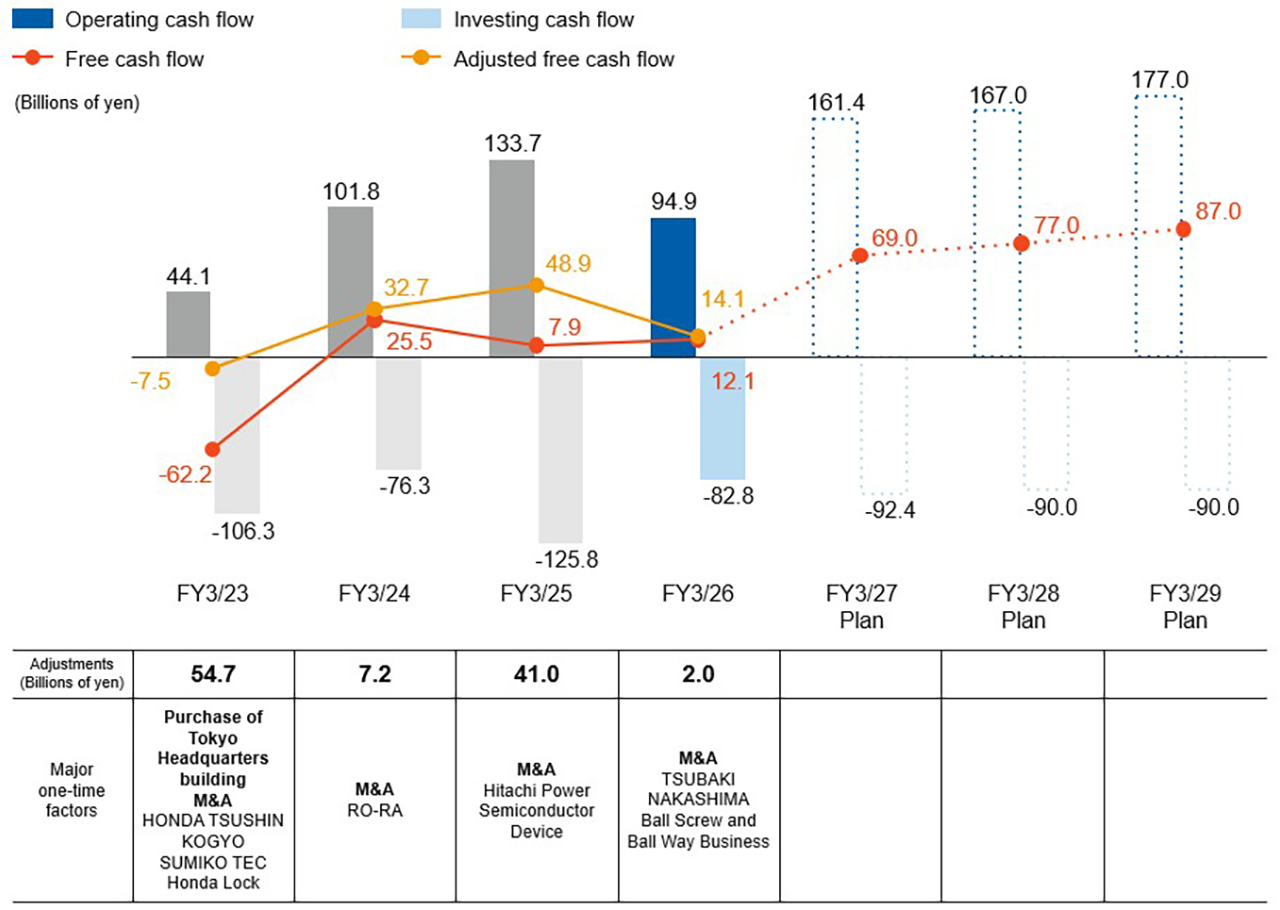
By pursuing the profitability improvements and capital efficiency optimization described above, we will further expand FCF. We plan to grow FCF to 87.0 billion yen in FY3/29. This growth will be driven by two pillars: growing operating cash flow through profit growth and disciplined management of working capital and capital expenditures. EBITDA has also grown steadily, and we expect to generate cumulative operating cash flow of approximately 500.0 billion yen over the three years starting from the fiscal year ending March 2027.
FCF in the fiscal year ended March 2026 was temporarily 12.1 billion yen, as an increase in trade receivables associated with strong sales caused part of our cash collection to be carried over into the following period. Meanwhile, adjusted FCF, which excludes one-time factors such as M&A expenditures, was maintained at 14.1 billion yen. We will continue to further strengthen our cash generation capabilities through steady conversion of trade receivables into cash, profit growth, optimization of working capital, and disciplined capital expenditure.
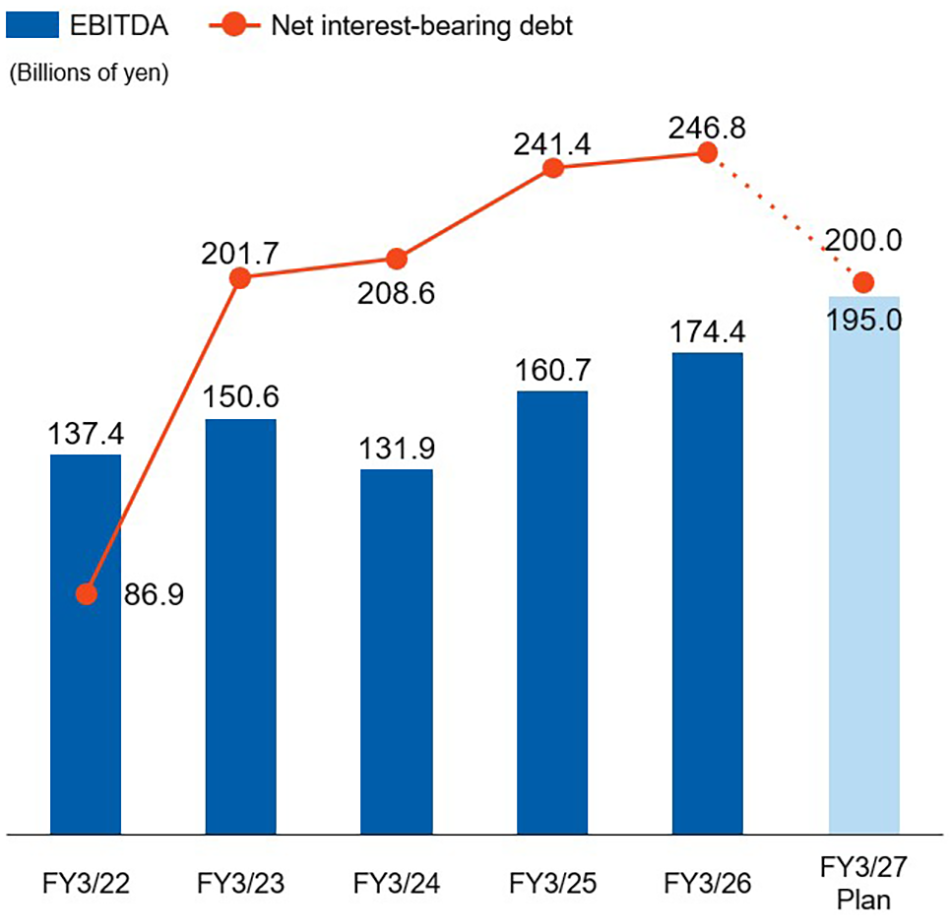
We also place a high priority on maintaining financial soundness as a foundation for flexibly executing growth investments and M&A. JCR upgraded the Company's credit rating to "AA–" in March 2025, recognizing its solid business performance and sound financial structure. While the equity ratio may fluctuate in the short term due to M&A and other factors, we will maintain an equity ratio of 50% or more over the medium to long term while appropriately managing net interest-bearing debt to achieve a balance between growth investments and financial soundness.

EBITDA/net interest-bearing debt trends
Annual trends in operating cash flow, investing cash flow, free cash flow, and adjusted free cash flow
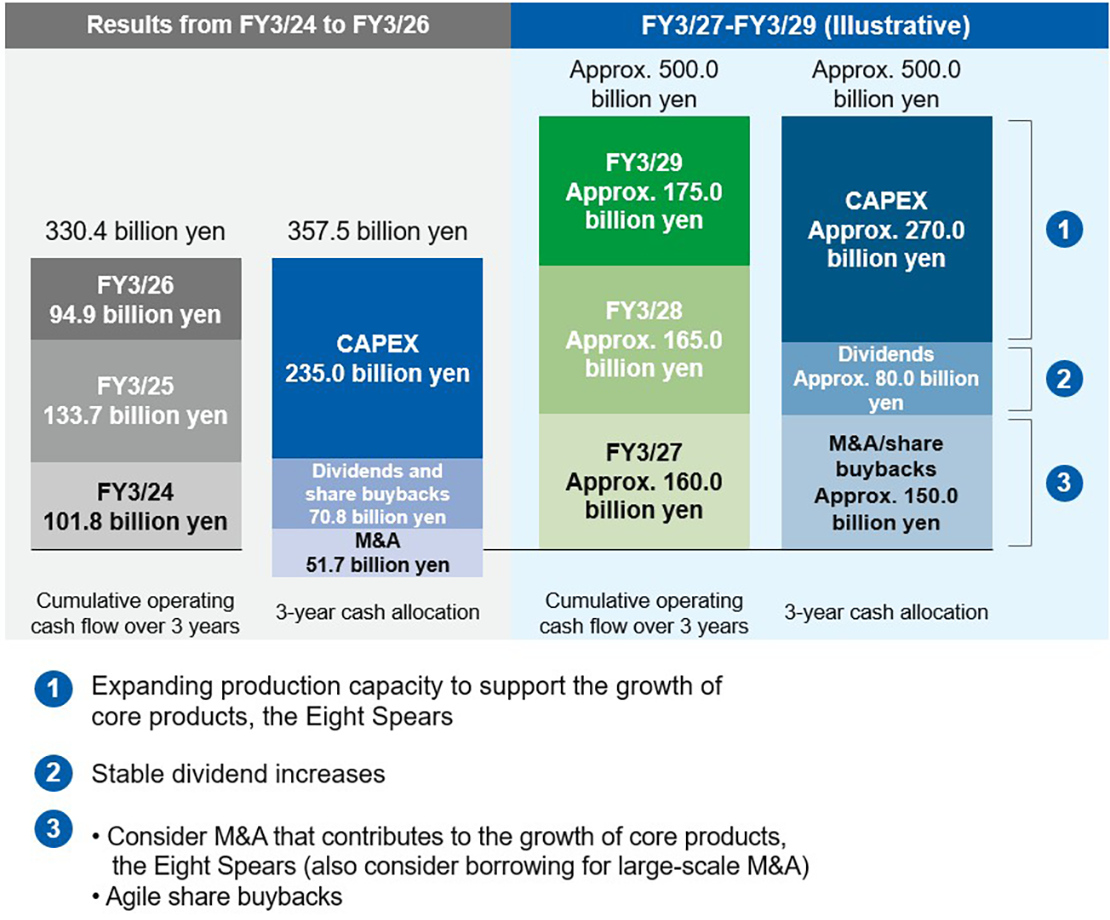
Cash allocation to achieve growth investment and shareholder returns
To achieve sustainable growth and enhance shareholder value, we have established a cash allocation policy. We allocate 50% of the operating cash flows generated to capital expenditure for organic growth. Of the remaining 50%, we allocate half (25%) to stable shareholder returns and use the other half (25%) along with borrowings as funding for M&A and other activities that enhance corporate value.
- Capital expenditure (approximately 270.0 billion yen): To be invested in expanding production capacity to support core products such as the Eight Spears and the Five Growth Areas +1.
- Shareholder returns (approximately 80.0 billion yen): We will aim for stable dividend increases, with a consolidated dividend payout ratio of approximately 30%. We plan an annual dividend of 60 yen for the fiscal year ending March 2027, which is an increase of 10 yen from the previous year.
- Strategic investment and flexible returns (approximately 150.0 billion yen): To be considered for use as funding for M&A investment and share buybacks. We will proactively pursue M&A that accelerates the growth of our core businesses, flexibly utilizing borrowings as needed for major deals.
Cash allocation
Management conscious of stock price and cost of capital
We aim to increase EPS through profit growth in our core business while also enhancing information disclosure and dialogue on growth strategy, capital efficiency, and governance with the goal of earning a fair valuation from the market.
In capital efficiency, we consistently generate ROE that exceeds our cost of capital (approximately 8%), even when we exclude the effect of exchange rate fluctuations and look only at our actual business performance. Going forward, we will further improve business profitability through structural reform and higher value-added operations as we continue to aim to achieve our long-term target of ROE of 15% or more. Under the cash allocation policy described above, we will pursue both growth investment and stable dividend growth and agile share buybacks to achieve continuous improvement in PBR and maximize shareholder value.
Concrete measures to improve invested capital to enhance corporate value further
Yusuke Kataoka
Business Officer Head of Accounting & Corporate Finance and Business Administration Division
To improve the balance sheet across the Company, we are working closely with the sales and procurement divisions to shorten the trade receivables collection period and extend the trade payables payment period through measures such as supplier financing, thereby improving CCC. In addition, we are working in collaboration with each business division to reduce inventory by rigorously implementing PSI management (integrated management of production, sales, and inventory), with DIO reduction as a KPI. Furthermore, regarding capital expenditures, we are striving to maximize FCF by carefully evaluating the return on investment and making effective use of various subsidies and existing facilities. To help achieve this, we immediately communicate the results to all business unit heads each month after the financial closing, using AI and DX to visualize and demonstrate management indicators which will drive rapid performance improvement. Business units and head office divisions will continue to work as one to contribute to corporate value by reducing invested capital and maximizing capital efficiency.
Enhancing shareholder value through dialogue with stakeholders
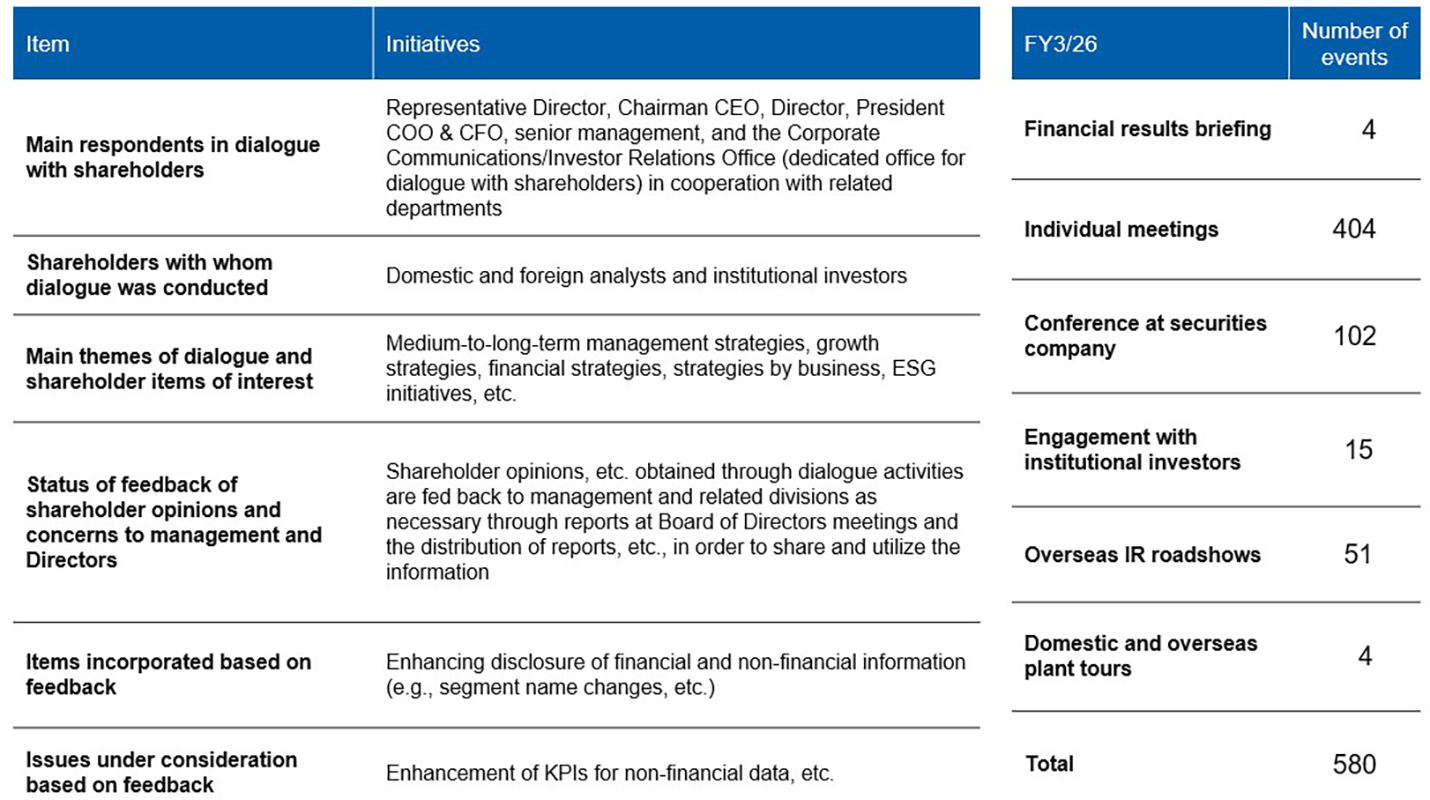
We believe that constructive dialogue with our stakeholders—including shareholders and investors—is one of the key measures that leads to a reduction in the cost of capital and the attainment of a fair valuation. We actively participate in meetings with analysts and institutional investors in Japan and abroad, and Chairman Kainuma and I also personally travel overseas because we value the opportunity to carefully explain our business and financial strategies. For businesses that are of particular interest to our investors, our business divisions and IR department work together to organize small meetings, IR Days, and factory tours both in Japan and overseas, allowing investors to experience firsthand the technical capabilities and operations on the ground. The strength of our IR activities lies in our commitment to taking stakeholder feedback seriously and swiftly incorporating measures that contribute to enhancing corporate value into our management decisions. Beyond our financial results and business performance, we are also actively engaging in dialogue on non-financial strategies—including human capital strategy and ESG—which form the foundation of sustainable growth. In recent years, in response to investor requests for more comprehensive disclosure regarding the effectiveness of the Board of Directors, we have been strengthening our communication on corporate governance, including holding ongoing dialogues between outside directors and institutional investors and expanding the disclosure of Board discussions.
Given our stable earnings base, we have also stepped up our IR activities for individual investors to a full-scale level. In July 2026, we held a hands-on program showcasing our products at the X TECH MUSEUM in the Tokyo Headquarters, which received high praise from participants. We will continue to communicate with our stakeholders and act on the valuable feedback gained through these dialogues in our management, striving for the sustainable enhancement of both corporate and shareholder value.
Status of dialogue with shareholders
Related links