



Results Summary
Latest Update : May 13, 2026
Back to Financial Results (FY3/2026)
Overview for the FY 3/2026 (From April 1, 2025 to March 31, 2026)
During the consolidated fiscal year, the global economy showed varying trends by country and region amid heightened uncertainty regarding the outlook, against the backdrop of the imposition of reciprocal tariffs by the United States and rising geopolitical risks.
The Japanese economy remained firm, with solid personal consumption supported by wage increases, as well as steady capital investment aimed at labor-saving and digital transformation (DX). The U.S. economy generally maintained its resilience. While personal consumption lacked momentum due to rising prices resulting from the pass-through of tariff increases, corporate activities remained active supported by the expansion of capital expenditures, particularly in the AI sector. The European economy remained firm as the personal consumption supported by a favorable employment environment, although experiencing a continuous decline in exports to the U.S. due to the U.S. reciprocal tariff increases.
The Chinese economy has seen steady exports of semiconductors and computer components driven by global AI demand, as well as automobiles benefiting from eased tariff measures. However, the prolonged slump in the real estate market weighed on the economy, and overall economic activity continued to stagnate. The economies of Southeast Asian countries vary from country to country. In Thailand and the Philippines, there were signs of recovery in goods exports; however, delays in the execution of government expenditure in both countries had an impact, and the pace of economic recovery remained moderate.
Working against this backdrop, the MinebeaMitsumi Group (our "Group") concentrated on improving productivity, thoroughly cutting costs, creating high-value-added products, developing new technologies, and enhancing its marketing approach to achieve sustainable growth and boost profitability further.
As a result, net sales increased by 141,684 million yen (9.3%) year on year to 1,664,387 million yen. Operating income increased by 9,497 million yen (10.1%) year on year to 103,979 million yen, profit before income taxes increased by 51,170 million yen (61.9%) to 133,779 million yen, and profit for the year attributable to owners of the parent increased by 39,577 million yen (66.6%) to 99,034 million yen.
The above includes the profit and loss of Minebea Linear Motion Inc. acquired on October 3, 2025, and profit before income tax includes valuation gains from fair value measurement of financial assets held by the Company.
Performance by Segment for the FY 3/2026 (From April 1, 2025 to March 31, 2026)
In addition, some classifications in "Motor, Lighting & Sensing segment" and "Semiconductor & Electronics segment" have been changed from the current consolidated fiscal year. The segment information disclosed for the previous fiscal year has been prepared based on the classification of reporting segments after the corporate organization change.
Precision Technologies Segment
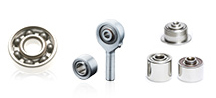
The main products in Precision Technologies segment include our Group's anchor product line, ball bearings, in addition to mechanical components such as rod-end bearings used in aircraft and hard disk drive (HDD) pivot assemblies, etc. as well as fasteners for aircraft. Sales of ball bearings, our Group's mainstay product, increased due to steady demand for servers for data centers and use in aircraft.
As a result, net sales increased by 25,449 million yen (10.0%) year on year to 281,151 million yen, and operating income increased by 6,549 million yen (11.8%) to 62,245 million yen.
Motor, Lighting & Sensing Business
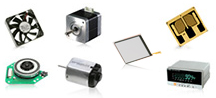
The main products in the Motor, Lighting & Sensing segment include electronic devices such as LED backlights for LCDs and smart products, as well as HDD spindle motors, sensing devices (measuring components), stepping motors, DC motors, fan motors, automotive motors, and special devices. Sales increased mainly due to an increase in demand for fan motors.
As a result, net sales increased by 29,573 million yen (6.9%) year on year to 456,517 million yen, and operating income increased by 1,547 million yen (6.1%) to 26,929 million yen.
Semiconductor & Electronics Business
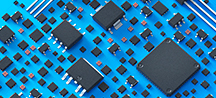
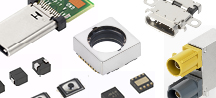
The main products in Semiconductor & Electronics segment include semiconductor devices, optical devices, mechanical components, and power supply components. Sales increased mainly due to an increase in sales of mechanical components.
As a result, net sales increased by 81,818 million yen (16.1%) year on year to 590,263 million yen, and operating income increased by 7,060 million yen (36.0%) to 26,669 million yen.
Access Solutions Business
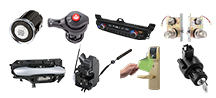
The main products in the Access Solutions segment include key sets, door latches, door handles, and other automotive components as well as industrial equipment components. Sales increased due to an increase in demand for communication antennas and industrial equipment parts.
As a result, net sales increased by 4,168 million yen (1.3%) year on year to 332,249 million yen, and operating income increased by 1,163 million yen (7.3%) to 17,087 million yen.
Other Business Segment
Software design and development, and machines produced in-house are the main products in our Other business segment.
Net sales increased by 676 million yen (19.2%) year on year to 4,207 million yen, while operating loss increased by 1,463 million yen year on year to 2,657 million yen.
In addition to the figures noted above, 26,294 million yen in corporate expenses, etc. not attributable to any particular segment is indicated as adjustments. The total amount of adjustments in the previous fiscal year was 20,935 million yen.
Analysis of Financial Position for the FY 3/2026 (From April 1, 2025 to March 31, 2026)
Assets, Liabilities, and Net Assets
Total assets at the end of the fiscal year under review were 1,814,837 million yen, an increase of 230,023 million yen from the end of the previous fiscal year. The main reason for this was an increase in trade and other receivables, and property, plant and equipment.
Total liabilities at the end of the fiscal year under review were 903,806 million yen, an increase of 73,617 million yen from the end of the previous fiscal year. The main reason for this was an increase in trade and other payables.
Equity amounted to 911,031 million yen, and the equity ratio attributable to owners of the parent was 49.5%, an increase of 2.6 percentage points from the end of the previous fiscal year.
Condition of Cash Flows
Cash and cash equivalents at the end of the fiscal year under review were 227,522 million yen, an increase of 13,266 million yen from the end of the previous fiscal year.
Cash flows from each business activity during the fiscal year under review and relevant factors were as follows: Net cash provided by operating activities amounted to 94,850 million yen (compared to 133,672 million yen in the previous fiscal year). This was primarily due to profit before income taxes, depreciation and amortization, and changes in trade and other receivables. Net cash used in investing activities amounted to 82,775 million yen (compared to 125,772 million yen in the previous fiscal year). This was primarily due to purchase of property, plant and equipment. Net cash used in financing activities amounted to 16,133 million yen (compared to 63,996 million yen provided by financing activities in the previous fiscal year). This was primarily due to dividends paid.
The content of this page is based on information included in the "Brief Report for Fiscal Year Ended March 2026 (From April 1, 2025 to March 31, 2026)" announced on May 12, 2026.